How Many Dates Is Considered Dating
Examining the milestone timeline from casual dates to exclusivity, the 10 date rule, 3-6-9 rule, and the DTR conversation.

Asking how many dates is considered dating feels like it should have a clean numeric answer, but the honest response is: it depends entirely on exclusivity, frequency, and open communication, not a fixed count. Some surveys point to a 3-6-9 rule or a rough ten date rule as common dating milestones, while others report dating exclusivity anywhere from six to two dozen dates in. What actually defines a relationship isn’t a specific number at all — it’s the moment two people explicitly agree to stop seeing others entirely, sometimes called the DTR conversation.
Why There’s No Official Number That Counts
There’s simply no official number because relationships naturally form at very different paces for different people involved. Dating frequency, emotional connection, and individual readiness all shift the overall timeline quite significantly, which is exactly why surveys report wildly different average numbers each time.
How Exclusivity Changes the Definition Entirely
Dating exclusivity genuinely changes everything the moment it’s openly discussed between two people — it means both people explicitly agree to stop seeing others, even before using formal labels like boyfriend or girlfriend. This shift usually matters far more than the timeline leading up to it.
Cultural Differences in What Counts as “Dating”
Cultural expectations heavily shape what actually counts as casual dating versus something far more serious and committed. In some communities, just a handful of dates signals real, genuine interest right away; in others, several months are expected before anything is considered truly official between two people.
How Long People Typically Date Before Defining the Relationship
Most dating survey data consistently points to somewhere between five and twelve dates before people naturally reach a define the relationship conversation, assuming roughly weekly meetups rather than infrequent, sporadic contact between the two specific people involved.
Signs You’ve Already Moved Past Casual Dates
Signs you’ve genuinely moved well past casual dating include meeting each other’s friends, making future plans together, and assuming mutual comfort without explicitly discussing other people. These behavioral shifts often arrive quietly before either person actually says anything explicit out loud.
How Frequency of Dates Affects the Timeline
Dating frequency directly affects how quickly the timeline moves forward. Seeing someone twice a week can reach a DTR conversation roughly twice as fast as seeing them once every couple of weeks, simply due to more accumulated shared time together.
What Conversations Actually Define the Relationship
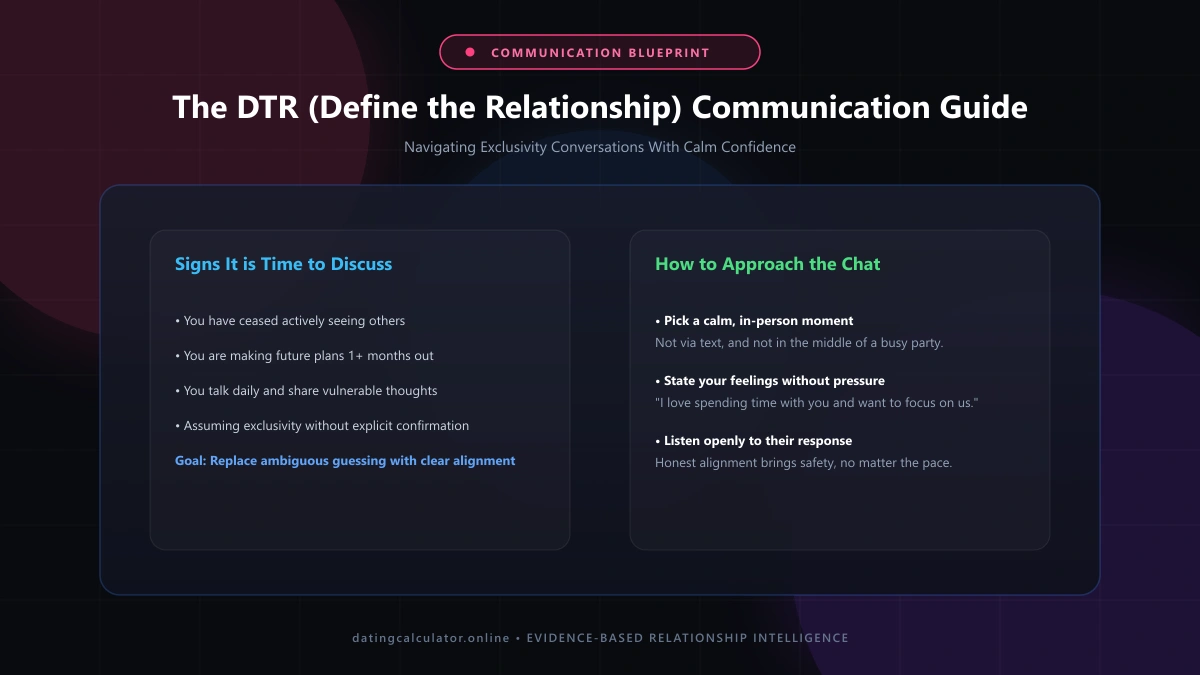
The conversations that actually define a relationship are always the explicit ones — directly discussing exclusivity, boundaries, and expectations out loud. Simply assuming a relationship label without saying so clearly often leads to mismatched, confusing expectations between two people.
How Dating Apps Have Changed This Timeline
Dating apps have compressed some timelines noticeably while stretching others considerably, since constant access to new matches can delay dating commitment for some people, while accelerated messaging speeds up emotional pace considerably for others entirely.
When It’s Worth Asking Where Things Stand
It’s genuinely worth asking where things stand once the relationship starts feeling exclusive in practice but hasn’t actually been confirmed out loud yet. Waiting too long to have the DTR conversation often creates unnecessary confusion and mismatched expectations for both people.
Why the Number Matters Less Than the Clarity
Ultimately, the exact dating milestones number matters far less than genuinely having open communication about mutual expectations early on. Two people can be completely on the same page after just three dates, or still remain unclear about things after fifteen dates together.
Common Dating Milestones
| Milestone | Typical Timing | Rule Name |
|---|---|---|
| Exclusivity discussion | 5–10 dates | Ten Date Rule |
| Emotional groundwork | First 3 months | 3-6-9 Rule |
| Regular check-ins | Every 2 weeks | 2-2-2 Rule |
Conclusion
There’s no single answer to how many dates is considered dating, since dating exclusivity depends on frequency and honest communication rather than a fixed count of outings together. Common benchmarks like the ten date rule or 3-6-9 rule offer rough guidance, but the real marker is an explicit DTR conversation. Focus less on counting dates and more on open communication about where things genuinely stand between the two of you.