How Does a Dating Calculator Work?
An analysis of the logic behind dating calculators, comparing rule based algorithms, scored quizzes, and demographic data.

Wondering how does a dating calculator work usually starts after seeing one produce a surprisingly specific number from just a few inputs. Most tools fall into one of two camps: a rule based calculator running a fixed dating algorithm, or a quiz based calculator that scores your answers into a compatibility score. Neither is doing anything mysterious — both rely on calculator logic built from simple assumptions about dating metrics like age and preferences.
What Data a Dating Calculator Typically Asks For
Most dating calculator tools ask for fairly basic inputs: your age, sometimes gender, and occasionally preferences like height or income level. The fewer calculator inputs required, the more generic — and noticeably less personally meaningful — the resulting output tends to be for you and your actual situation.
The Logic Behind the Numbers It Produces
Behind the interface, the calculator logic is usually just simple arithmetic dressed up rather nicely. A rule based calculator applies a fixed formula, like halving your age and adding seven to it, then displays the result as though it were a precise, individualized finding.
How Different Calculators Reach Different Results
Because different tools rely on different calculator assumptions, the same person can get noticeably different results from two separate sites entirely. One might weight age heavily, another might factor in stated preferences, producing genuinely inconsistent dating estimate figures side by side.
What a Dating Calculator Can’t Actually Tell You
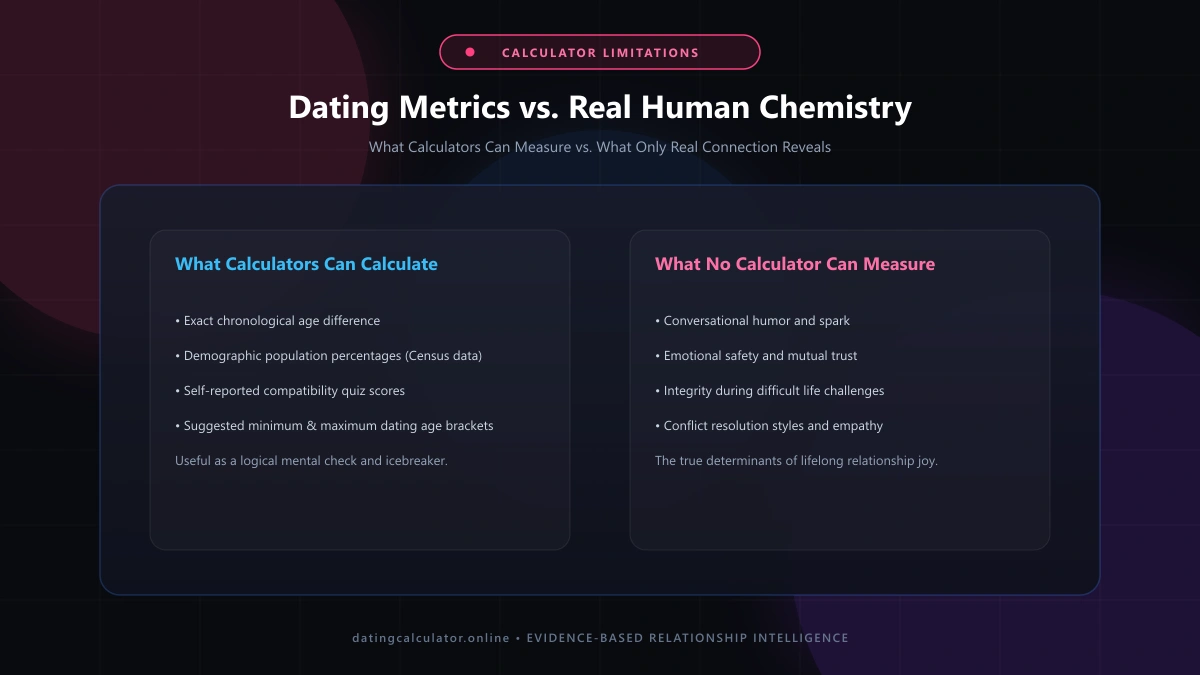
No dating calculator can ever measure chemistry, communication style, or shared values — the things that genuinely determine relationship success over time. It only processes the dating metrics you feed it, which is a narrow, incomplete slice of real compatibility.
How These Tools Are Built From Simple Formulas
These tools are typically built from calculator formula logic as simple as one single equation or a short scoring rubric behind the scenes. There’s rarely anything resembling genuine artificial intelligence behind a basic online dating tool, despite how polished the interface looks.
Why Results Should Always Be Treated as Estimates
Every dating calculator result should always be treated as simply a rough estimate, never a hard fact at all. Calculator accuracy depends entirely on how well the underlying assumptions match your actual real-life situation, which they rarely manage to do particularly well.
Comparing Rule-Based vs Quiz-Based Calculators
Rule based calculators apply one identical formula to everyone; quiz based calculators instead score individual answers into a more personalized result. The quiz approach feels tailored, but its calculator methodology still reflects the creator’s own underlying assumptions about what matters.
How Personal Factors Get Left Out of the Math
Calculator personal factors like humor, emotional intelligence, and shared interests are almost never part of the underlying math. This calculator generalization is the single biggest reason results shouldn’t ever replace real, honest judgment about an actual person.
When a Dating Calculator Is Actually Useful
A dating calculator works best simply as a lighthearted icebreaker or a rough starting point for personal reflection, not a serious decision-making tool. Used this way, even a simplistic compatibility score can spark a genuinely useful, worthwhile conversation between two people.
Reading Your Results Without Overthinking Them
Reading results without overthinking them means always remembering the calculator output range is a rough estimate, never a final verdict on anything. If a number feels genuinely off, trust your own honest judgment over the tool’s calculator formula logic every single time it matters.
Calculator Types Compared
| Type | Main Input | What It Produces |
|---|---|---|
| Rule-Based | Age | Fixed formula result |
| Quiz-Based | Answers to questions | Weighted compatibility score |
| Data-Driven | Preferences + census data | Population percentage match |
Conclusion
So how does a dating calculator work? Almost always through simple math — either a fixed rule based calculator formula or a scored quiz based calculator — dressed up as a polished, personalized result. Neither approach can measure real compatibility, since calculator personal factors like values and chemistry never enter the equation. Treat any dating estimate as a rough starting point for reflection, not a verdict on your love life.