Dating Standards Calculator
How dating standards calculators score non-negotiables against Census Bureau data and CDC statistics to calculate match pool percentages.

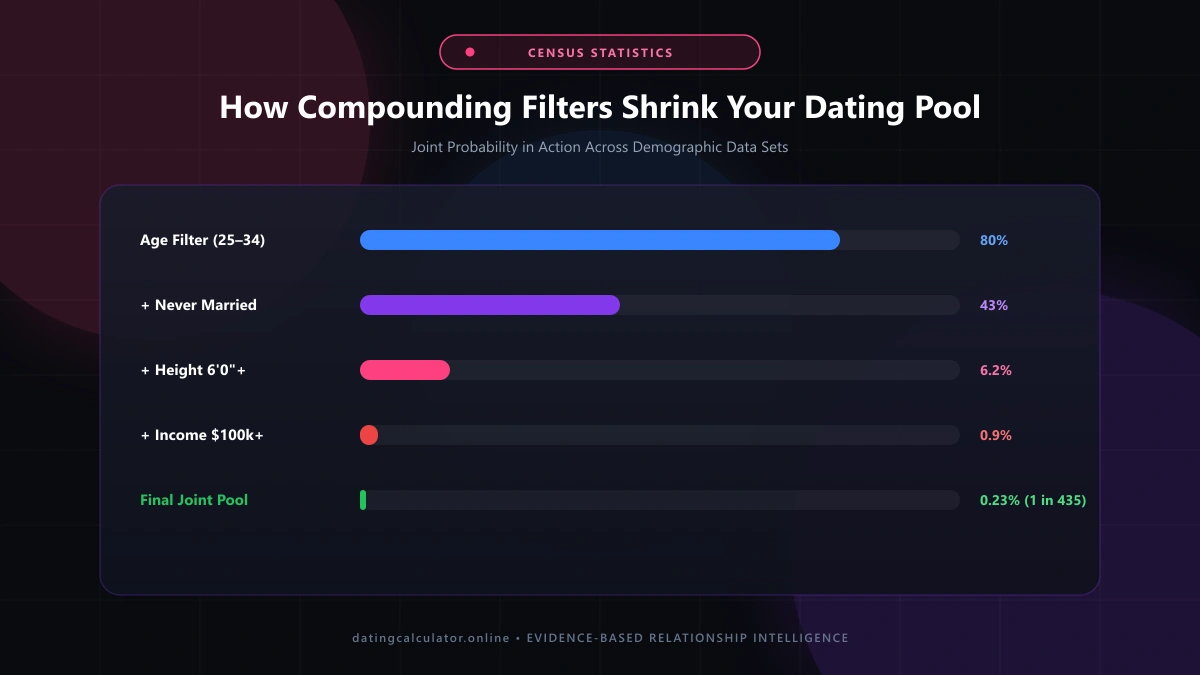
A dating standards calculator takes your stated dating criteria — age, height, income, and other dating traits input — and returns a percentage showing what portion of the population meets every requirement. Built using real Census Bureau data and CDC data, tools like this frame themselves as a reality check disguised as a fun quiz. The goal isn’t to shame anyone for having non-negotiables; it’s to show how quickly criteria narrow the realistic dating pool.
What “Standards” Actually Means in This Context
In this context, ‘dating standards’ means the specific list of core needs you genuinely require in a long-term partner — not vague, fuzzy preferences, but real non-negotiables like shared values, daily habits, or life goals that meaningfully affect your long-term relationship needs and overall happiness.
How This Type of Calculator Scores Your Answers
The calculator scores your answers by carefully cross-referencing selected traits against real, publicly available population data sets. Each additional dating criteria you add narrows the percentage of population that satisfies every single requirement simultaneously, sometimes quite dramatically and unexpectedly for many users.
The Difference Between Standards and Simple Preferences
Standards differ from simple preferences mainly in overall weight: a preference is flexible and negotiable, while a genuine standard is something you genuinely wouldn’t compromise on for anyone. Confusing the two is a common reason dating standards scores end up feeling unexpectedly low to people.
How Your Answers Compare to Average Results
Most tools show how your specific inputs compare to typical average results, giving useful context for whether your combined dating criteria are unusually narrow or fairly common among other people using similar standards calculator tools online.
Why Standards Naturally Shift Over Time
Standards evolution is completely normal and genuinely expected as life simply goes on — what felt absolutely essential in your twenties often shifts quite noticeably by your thirties or forties as self-worth, hard-won life experience, and relationship goals naturally mature and change alongside you.
What High vs Low Scores Actually Indicate
A low dating standards score absolutely doesn’t mean something is fundamentally wrong with you personally; it often just reflects a longer, far more specific list of genuine non-negotiables you hold onto. A high score simply suggests a broader, more flexible pool of potential matches available to you overall.
How to Use the Result Without Judging Yourself
Use the result purely as information, never as a harsh judgment on your worth. A narrow percentage of population match doesn’t automatically mean your standards are unrealistic — it simply quantifies the trade-off between specificity and overall dating pool size.
Common Categories These Calculators Tend to Measure
Common categories typically include age, height, income, education level, career, and family planning goals. Some more advanced tools also weigh emotional availability and consistency as factors, though these softer traits are far harder to quantify accurately than harder demographic dating criteria like income or location.
Where This Type of Tool Falls Short
The biggest limitation by far is that no calculator ever measures chemistry, discernment, or actual real-world compatibility between people. It only crunches the statistical likelihood of matching stated traits — a narrow, purely numerical slice of what genuinely matters in a relationship.
Turning a Score Into a Useful Self-Reflection
The most useful move by far is turning the score into genuine self-reflection: which non-negotiables genuinely matter most, and which are simply preferences dressed up as strict requirements? Refining that honest list matters far more than the final percentage shown.
Common Standards Categories
| Category | Example Requirement | Effect on Match Pool |
|---|---|---|
| Age range | Within 5 years | Moderate narrowing |
| Income level | Above average | Significant narrowing |
| Height preference | Specific range | Moderate narrowing |
Conclusion
A dating standards calculator turns your non-negotiables into a single percentage, using real Census Bureau data to show how many people realistically meet every requirement you list. The number isn’t a judgment — it’s a reality check meant to spark honest self-reflection about which dating criteria truly matter most. Use the result to refine your genuine core needs, and remember that standards evolution over time is completely normal and expected.